Prevention of Accidents
- Home
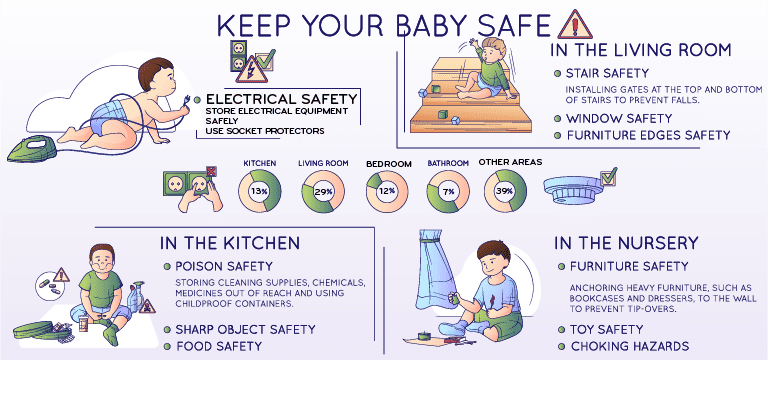
Baby Proofing Home Safety: Complete Room-by-Room Guide for Infants and Toddlers
Creating a safe home is simpler than it seems. You need to plan and start before your baby crawls. Identify and focus on the highest-risk hazards (choking, poisoning, drowning, burns, strangulation, and falls), and repeat a quick ground-level survey every month as your child’s skills change.
This comprehensive, pediatrician-approved guide provides clear, room-by-room checklists, age-specific tips, and emergency preparedness to help families keep children safe while they explore and grow.
Why Baby Proofing Matters?
Curiosity drives learning—and with it, risk. As infants begin rolling, crawling, cruising, and walking, ordinary household objects and layouts that we as adults take for granted can become dangerous. While many parents focus on mealtimes, object-related hazards at ground level are often more dangerous in infancy.
A proactive, structured approach to childproofing reduces preventable injuries, avoids emergencies, and gives families peace of mind.
Key Takeaways Parents Can Use Today
Begin baby proofing in the third trimester or by 4–5 months at the latest.
Prioritize six critical risks: choking, poisoning, drowning, burns/scalds, strangulation/entrapment, and falls/tip-overs.
Do a monthly “Ground-Level Safety Survey” on hands and knees in every room.
Store all medicines and chemicals locked, high, and in original containers.
Anchor furniture and TVs, secure cords and blinds, and install gates and latches.
Build an emergency plan: first aid kit, poison control, and CPR knowledge.
Getting Started With Baby Proofing
The Baby Proofing Timeline
Before baby arrives: Plan storage, anchors, gates, and safe sleep.
0–6 months: Establish safe sleep, caregiver routines, and storage systems.
6–12 months: Install locks, anchors, and gates; remove small objects at floor level.
12–36 months: Focus on climbing risks, outdoor hazards, and consistent supervision.
Essential Tools and Devices
Cabinet and drawer locks
Outlet covers and plug caps
Corner guards and edge bumpers
Door knob and door handle covers
Safety gates (hardware-mounted for stairs)
Anti-tip furniture straps and TV wall mounts
Window locks and cordless blinds or cord winders
Toilet locks; stove knob covers; fridge/dishwasher latches
Non-slip mats for bathrooms; anti-scald devices where possible
The 15-Minute Ground-Level Safety Survey
Get on hands and knees in each room to view hazards at a child’s eye level.
Apply the small-object test: if it fits through a toilet paper tube, it’s a choking risk for children under 3. Another practical tip: If it is smaller than the child’s thumb/even your own thumb then it could potentially choke the child.
Sweep for coins, batteries, magnets, jewelry, small toy parts, buttons, pins, beads, and pet food.
Trace cords and cables, check furniture stability, and scan under sofas and beds.
Repeat monthly and after gatherings, repairs, or furniture rearrangement.
General Safety Principles For Every Room
Supervision first: While safety layers reduce risk, attentive supervision prevents most incidents.
Storage hierarchy: Locked + high + original containers for all medicines, chemicals, and hazardous items.
Choking awareness: Check floors daily and be aware of high-risk items like button batteries and magnets.
Electrical and cords: Use outlet covers, manage cords, eliminate looped blind cords, and secure power strips.
Furniture stability: Anchor bookshelves, dressers, and TVs; avoid placing heavy or unstable items atop furniture.
Environmental safety: Install smoke and carbon monoxide alarms; set water heater to 49–50°C; maintain clear escape routes; keep lighters/matches locked.
Room-by-Room Baby Proofing Guides
Living Room and Common Areas
Anchor TV and furniture to walls; use low, stable TV stands if not wall-mounted.
Remove small décor items; secure remotes and small electronics (battery compartments).
Manage cords and cables by using outlet covers and cord concealers.
Replace or secure looped blind cords; choose cordless blinds where possible.
Use corner guards on coffee tables; secure or remove loose rugs.
Keep houseplants out of reach; verify plant toxicity. Some plants have sharp serrated leaves, tips or thorns.
Action tip: Store spare batteries in a locked, high cabinet; check all remotes and toys for secured battery doors.
Kitchen
Install cabinet and drawer locks, especially under-sink cleaners and chemical storage.
Place knives and sharp tools out of reach; use magnetic strips high on walls or locked drawers.
Use back burners, turn pot handles inward, and consider stove knob covers.
Latch fridge and dishwasher; avoid preloading sharp items when baby is nearby.
Store detergent pods and cleaners locked and high; wipe spills immediately.
Elevate pet food; avoid tablecloths that can be pulled down.
Action tip: Keep a dedicated “safe drawer” or basket with soft, non-breakable kitchen items for supervised play.
Bathroom and Laundry
Lock medicines and cosmetics; move them to high, locked storage.
Install toilet locks; never leave water in buckets or tubs.
Use non-slip bath mats; set the water heater to 49–50°C; check the bath water with your wrist or a thermometer.
Lock laundry chemicals and detergent pods; keep washers and dryers closed and latched.
Store razors, hairdryers, and straighteners in a locked and unplugged state.
Action tip: Create a bath-time checklist: lock the toilet, set the water temperature, prep supplies within arm’s reach, and never leave the child unattended.
Nursery and Bedrooms
Safe sleep: firm mattress, fitted sheet, no pillows, bumpers, toys, or loose blankets.
Keep cribs away from cords, windows, and heaters; secure monitor cables out of reach.
Anchor dressers and wardrobes; use drawer stops.
Store small items like jewelry, coins, buttons, and hair accessories out of reach.
Use cordless blinds or secure cords with winders; avoid tablecloths or hanging fabrics.
Action tip: Perform a nightly floor sweep for small objects; check under the crib and furniture.
Stairs, Hallways, Balconies, and Windows
Install hardware-mounted gates at the top and bottom of the stairs.
Keep stairways clear; ensure banister spacing meets safety standards or add guards.
Use window locks and guards; keep furniture away from windows.
For balconies, enforce barriers and locked doors; supervise at all times.
Action tip: Place a visual reminder at the stair top/bottom: “Gate closed?”
Outdoors, Garage, and Car
Keep tools, paints, fuels, and chemicals locked and high.
Empty buckets, coolers, and tubs; secure water features and pools with compliant barriers.
Lock grills and cover sharp edges; store matches and lighters out of reach.
Practice car seat safety by ensuring the correct seat type, proper installation, and secure harnessing. Never leave a child alone in a car.
Secure driveways, supervise around vehicles, and be aware of blind spots.
Action tip: Establish an “outdoor safety lap” before playtime: check gates, lock storage, and remove standing water.
High-Risk Categories To Prioritize
Choking: Small objects, button batteries, magnets, toy parts, coins, and balloon fragments are major risks, especially in infancy.
Poisoning: Store medications (including vitamins), cleaners, cosmetics, alcohols, essential oils, and toxic plants in a locked, high location, in their original packaging.
Drowning: Bathtubs, buckets, toilets, buckets/mop pails, and pools—empty after use, lock bathrooms, use toilet locks, and ensure barriers.
Burns and Scalds: Hot water, appliances, cords, space heaters, irons, candles—keep out of reach; secure cords; set water temperature; never carry hot liquids while holding a baby.
Strangulation/Entrapment: Blind cords, electrical cables, drawstrings, and furniture gaps can pose hazards—use cordless blinds and manage cords properly; avoid looped cords.
Tip-Overs and Falls: Anchor furniture and TVs; avoid climbable arrangements; use gates; supervise climbers.
Age-Specific Baby Proofing Tips
0–6 Months
Focus on safe sleep and caregiver routines.
Plan storage and anchoring; install alarms and detectors.
Keep small objects off floors and surfaces within 1 meter of baby zones.
6–12 Months
Crawling and pulling up begins—install locks, anchors, and gates now.
Do weekly floor sweeps and a monthly ground-level survey.
Remove tablecloths; secure cords; elevate pet food and litter.
12–36 Months
Climbers and explorers—expect attempts to open, climb, and test boundaries.
Reinforce furniture anchors, add drawer stops, and reassess window safety.
Supervise outdoors; secure garden tools, chemicals, and standing water.
Emergency Preparedness for Parents
Save emergency numbers in phones and post them visibly at home.
Keep a well-stocked first aid kit; include child-safe medications and dosing tools.
Learn infant and child CPR and choking response.
After any ingestion or suspected exposure, follow medical guidance immediately.
Document allergies, chronic conditions, and emergency contacts.
“Have you ever faced a heart-stopping moment when your child narrowly escaped a home injury? Share your story and lessons learned below—your experience could help another parent stay safe!”
Frequently Asked Questions
Q: When should we start baby proofing?
A: Begin in the third trimester or by 4–5 months. Installing early reduces stress and ensures readiness before crawling starts.
Q: What hazards do parents most often miss?
A: Loose small objects at floor level, unsecured furniture and TVs, blind cords, and detergent pods stored low or in visible containers.
Q: How often should we reassess our home?
A: Monthly, and after parties, travel, renovations, or when your child learns a new skill, like opening doors or climbing.
Q: Are baby walkers safe?
A: Walkers are associated with significant injuries and are not recommended. Stationary activity centers are safer alternatives for short, supervised periods.
Q: Do we need professional baby proofers?
A: Many families can childproof effectively using checklists. Professional help can be useful in complex homes or when time is limited.
Downloadable Resources
Printable Ground-Level Safety Survey checklist (PDF)
Room-by-room baby proofing checklists (PDF)
Emergency contacts card for your fridge and phones (PDF)
Want these resources emailed? Request the complete set and receive it instantly.
Why Parents in Mumbai Trust Nathani Clinic?
Nathani Clinic brings pediatric surgery and pediatric medicine together to guide families with evidence-based, practical safety measures that fit real homes and real lives. The approach emphasizes prevention, clarity, and ongoing support as your child grows.
Comprehensive safety counseling from an experienced pediatric team
Personalized room-by-room recommendations for your home setup
Guidance aligned with age, development, and family routines
Book a Baby Proofing Consultation
Get personalized, room-by-room guidance tailored to your home and your child’s developmental stage.
WhatsApp the clinic with quick questions
Request the downloadable safety kit by email
Create a safer home today. Small, consistent changes make the biggest difference.
Prevention of Accidents
Subscribe Our Newsletter
The premier children’s clinic and general vaccination center in Chembur, Mumbai
Make an Appointment
- 8 AM - 8 PM , Monday - Saturday
Call Us Today
9867694813
Childrens Clinic & Vaccination Center