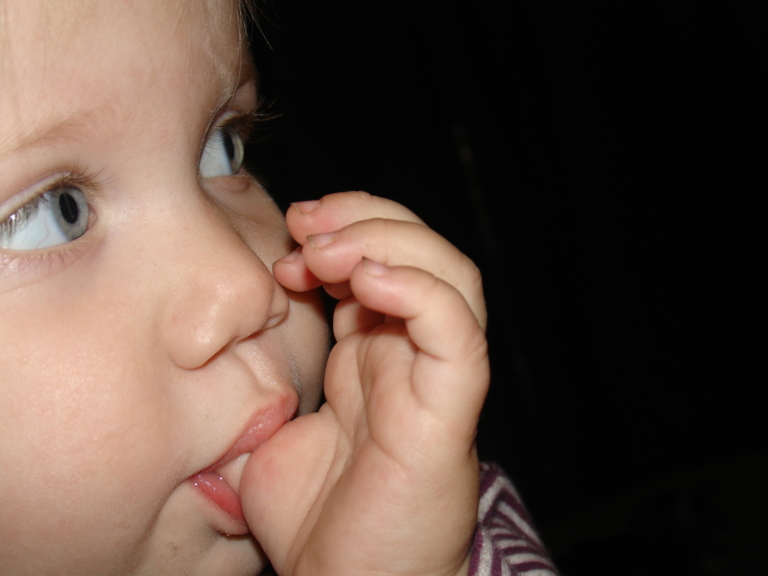
Non-nutritive sucking indicates the sucking of any object that does not have any nutritional value. Most of the time, it is a normal part of early development. If this persists, it may then become a learned habit. It is a mechanism by which the child learns to soothe herself. It may occur in 70 to 90 percent of infants. As children get older, the frequency decreases significantly, but by 4-5 years of age, in most children, other coping mechanisms replace it.
Children, to soothe themselves (even the most attentive parent cannot be there for the child all the time), suck on:
- Thumbs
- Other digits
- Pacifiers (if someone offers one to the baby)
Pacifiers are marginally better than digital sucking, as they are less likely to persist to the age of 4-5 years and beyond. If a child uses a pacifier, is less likely to indulge in thumb-sucking or other digits.
Problems associated with thumb-sucking
Early cessation of breastfeeding
Infants who suck on pacifiers are 2-3 times more likely to stop breast-feeding early compared to those who do not use pacifiers. In contrast, breast-feeding does not cease early in children who indulge in thumb-sucking or other digits.
Increased risk of developing middle ear infections
The risk of middle ear infections increases almost 1.25 times in infants and children who suck on pacifiers. There is no increased risk with digit sucking.
Decreased risk of sudden infant death syndrome or SIDS (an advantage!)
This is the enormous advantage of using pacifiers. Infants who use pacifiers have almost one-third less risk of SIDS. The American Academy of Pediatrics recommends caregivers consider offering a pacifier at naptime and bedtime after parents establish a breast-feeding routine (by around one month of age) to prevent SIDS. If pacifiers get dislodged after the child falls asleep, do not put them back in. Do not offer pacifiers throughout the day when the child is awake, just to quieten an upset child.
Dental Malocclusion
A variety of malocclusive defects can occur because of all types of non-nutritive sucking. Constant pressure from the non-nutritive sucking object on the tender and developing teeth results in teeth that are out of alignment. Cosmetic and functional problems may then ensue.
Nail Infections & Skin Infections
Infections are not very common, except in recalcitrant cases. The child may develop small abscesses around the nail or in the pulp of the fingers, which may then require minor operations to drain the pus.
Who is more likely to suffer more?
- Non-nutritive sucking across multiple settings (play, sleep, cry, hunger, etc. ).
- Conscious sucking (not only when the child is falling asleep).
- Female.
- Older Child.
- Uncooperative in the steps taken to break the habit.
How to break the habit of thumb-sucking?
- Stop pointing out and nagging: If you constantly nag your child, stop it! This only acts as positive reinforcement and makes things more difficult.
- Identify any stress factors for the child: Could be a noisy environment, domestic quarrels, the birth of a sibling, etc.
- Positive Reinforcement: Like all behavioral disorders, positive reinforcement and reward systems work best. Start a “star chart” by giving the child gold stars for every day that they did not indulge in this habit. Once the child accumulates a certain number of stars per week, or a certain number of consecutive stars, reward them with their favorite treat.
- Negative Reinforcement: No punishments are recommended. Put bitter-tasting stuff like करेला (bitter gourd) juice on their thumb / digits. Do not use castor oil, as this may cause violent purging. In extremely rare instances, doctors previously advised temporary casts to break the habit, but dentists no longer recommend them because of newer dental appliances.
- Intraoral dental appliances – A seal is required between the pacifier / digit and the mouth for effective sucking. Researchers created devices to prevent this seal formation. As a result, the child cannot suck effectively. You need to consult with your pediatric dentist.
Do share with us your own remedies that may have worked with your own child in the comments section below. It will benefit other readers. What will be most interesting will be what you used to coat the child’s digits that caused them to give up on thumb-sucking.
Follow us on Facebook to be informed of more such informative articles and to request more topics of your choice.
Related reading: How to choose a teether for your baby