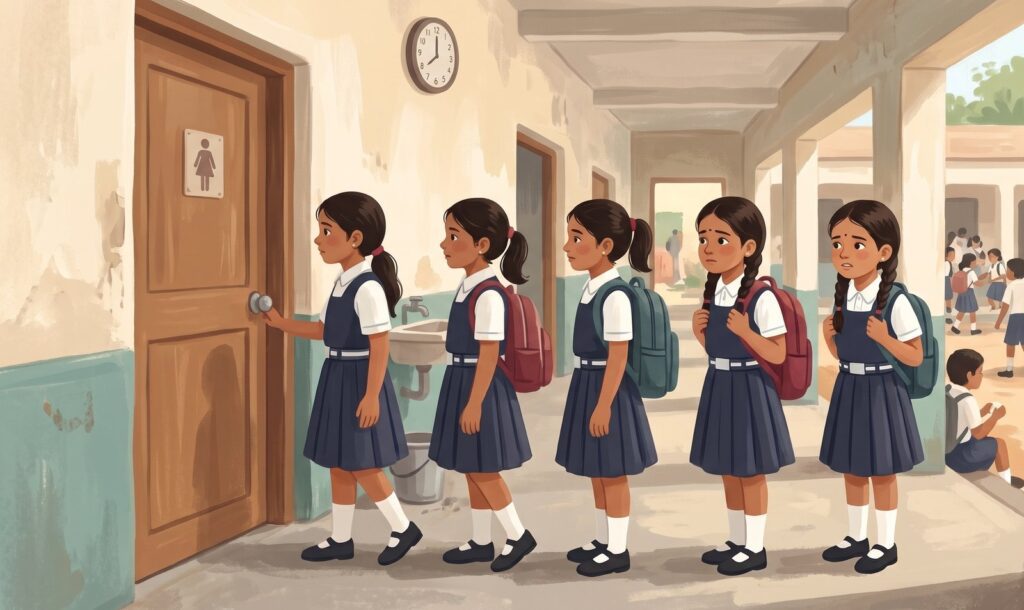
Most girls avoid school toilets because they are dirty, lack water, a lock or privacy, or because they are too shy to ask. Holding urine and stool all day can cause urine infections, constipation, tummy pain and daytime wetting. Regular toilet breaks, enough water, a small hygiene kit and a word with the school usually fix them.
In this article
- Why do so many girls refuse to use school toilets?
- How common is toilet avoidance in schoolchildren?
- What are the effects of holding urine all day at school?
- Can avoiding the school toilet cause constipation?
- How do I know if my daughter is holding it in at school?
- What are the symptoms of a urine infection in girls?
- Why is hovering over a public toilet seat a problem?
- Can a dirty toilet seat give my daughter a urine infection?
- How can I help my daughter feel comfortable using the school toilet?
- What should go in a school toilet kit for girls?
- How do periods change toilet use for older girls?
- What can parents and schools do together?
- When should I see a doctor about school toilet avoidance?
- What happens when you see the doctor?
As a pediatrician in Chembur, Mumbai, I, Dr. Neeta Nathani, see this as one of the commonest problems in schoolgirls. The story is nearly always the same: a bright, well-behaved girl who drinks almost nothing all day, rushes to the bathroom the moment she gets home, and then comes in with burning urine or a tummy ache that “comes and goes”. Once parents understand what is happening, the fix is mostly practical, not medical.
Why do so many girls refuse to use school toilets?
Girls rarely refuse a school toilet without a reason. Most children from middle-class homes are used to a clean toilet, and when we ask gently, the answers are very specific:
Wet floors she might slip on, splashes on clothes and shoes, unflushed toilets, no soap.
No mug or tap, or a heavy bolt younger girls fear will trap them inside.
Gaps under doors, boys’ toilets right next door, classmates giggling outside.
Some teachers allow trips only at recess, and a shy child would rather hold on.
Queuing, tiffin and play leave no time in a short recess.
A squat toilet at home and a Western one at school, or the other way round.
No bin, no water and no privacy to change a pad.
How common is toilet avoidance in schoolchildren?
Toilet avoidance at school is common everywhere, not only in India.
Government UDISE+ school data for 2025-26 still list tens of thousands of Indian schools where the girls’ toilet is missing or not working. The problem is real, not fussiness.
What are the effects of holding urine all day at school?
A school-age child should empty her bladder every two to three hours, about five to seven times a day.
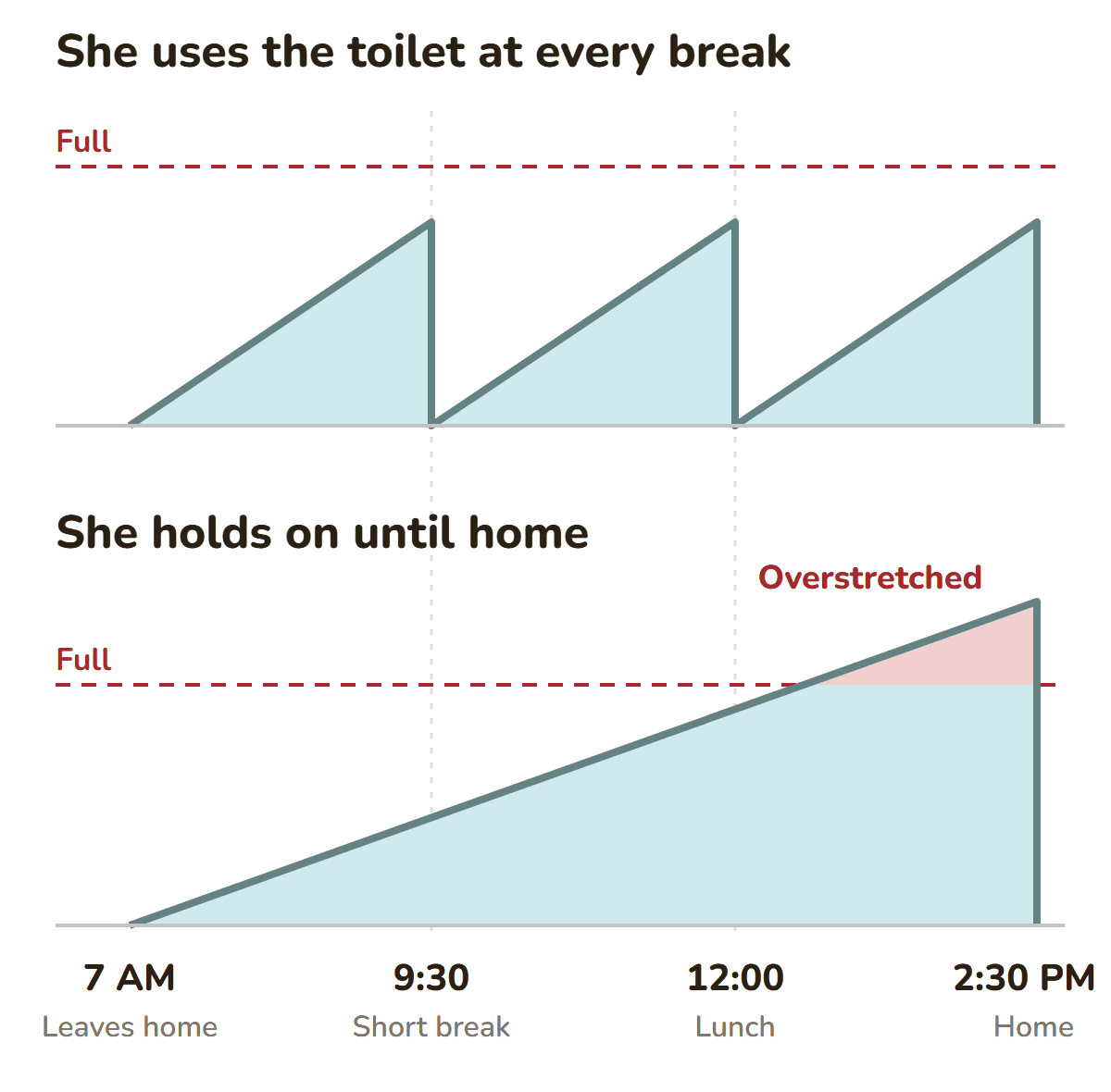
Holding on from 7 in the morning until home does three things:
- The bladder overstretches: over months it stops sending a clear “I am full” signal, so she goes even less often.
- Germs multiply: like stagnant water in a pond, urine that sits still lets germs grow, and a girl’s short urine passage lets them climb in. This is why urine infections are far more common in girls.
- The muscles learn bad habits: squeezing the sphincters, the rings of muscle that close the bladder outlet, becomes automatic, so she cannot relax and empty fully. Doctors call this dysfunctional voiding. Over a long time, the higher pressure inside the bladder can affect the kidneys and their growth.
Repeated urine infections with fever can scar the kidneys in some children. That is why we take this “small” habit seriously. Read more about urinary tract infections in children.
Can avoiding the school toilet cause constipation?
Yes. Girls who avoid the school toilet also hold stool there, and many drink less water so they will not need to go.
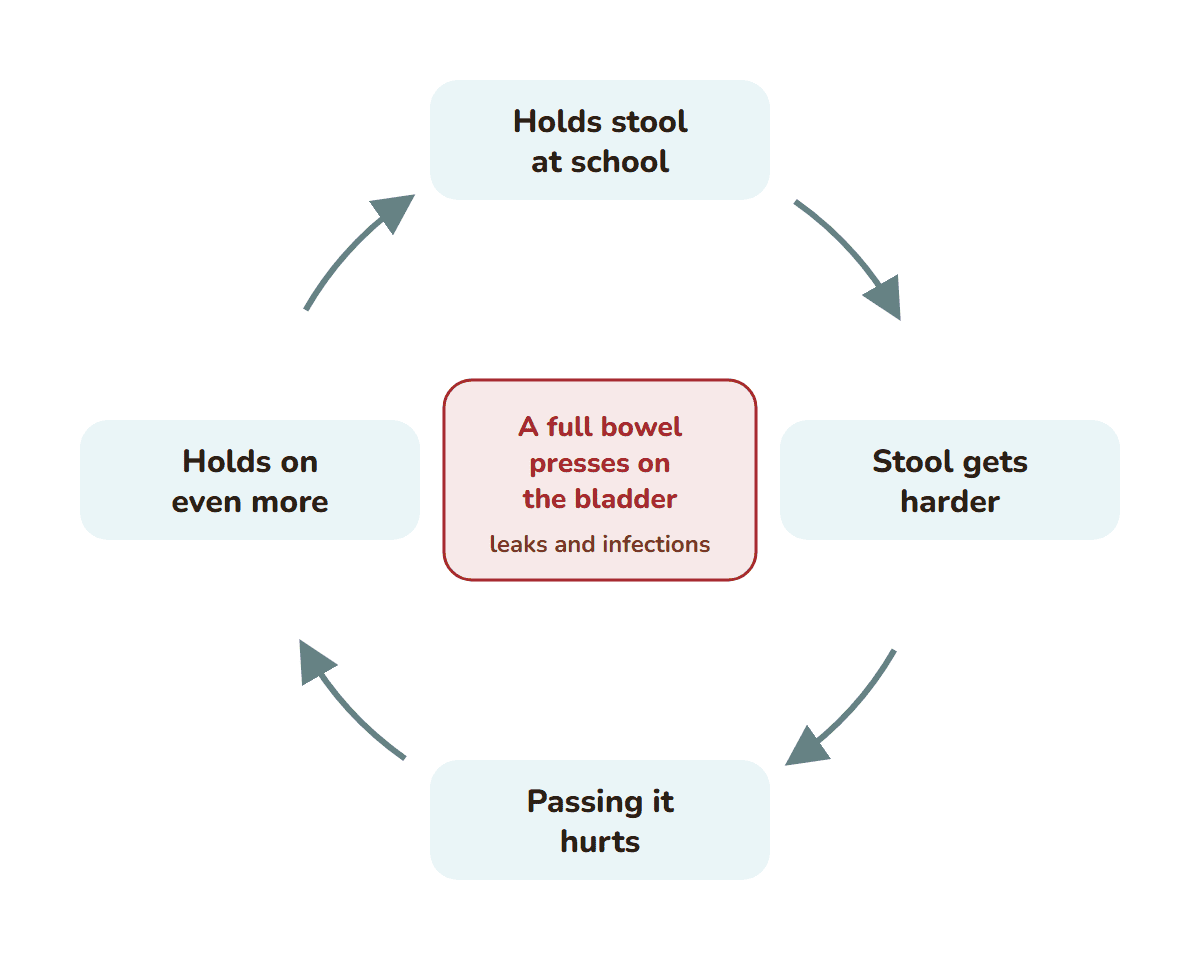
In our experience, treating the constipation is half the cure for a schoolgirl’s urine problems. See our guide to constipation in infants and children.
How do I know if my daughter is holding it in at school?
Most girls will not tell you, so watch for these signs.
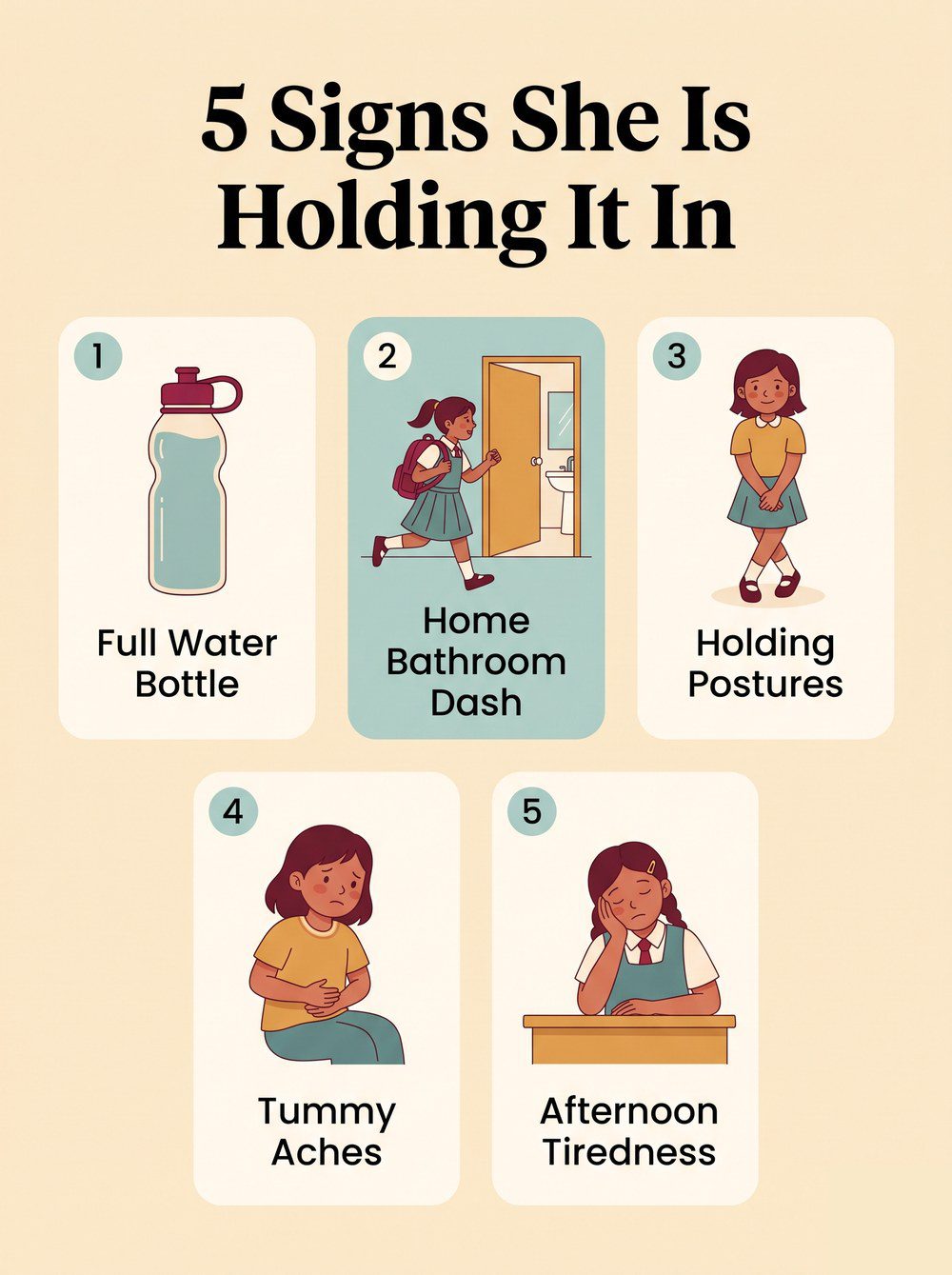 AI-generated illustration
Also look for damp or stained underwear, hard stools only every two or three days, and burning or many small trips to the toilet in the evening.
What are the symptoms of a urine infection in girls?
- Burning or pain while passing urine
- Going to the toilet very often, passing only a little each time
- A sudden urge that cannot wait, or new wetting by day or night
- Pain low in the tummy, or cloudy or bad-smelling urine
- Fever, vomiting, or pain in the back or side: the infection may have reached the kidneys, so see a doctor the same day
Younger girls may just say “it hurts down there”. A urine test confirms the infection. Please do not give antibiotics left over from an earlier illness: they hide the infection and make the test unreliable.
Why is hovering over a public toilet seat a problem?
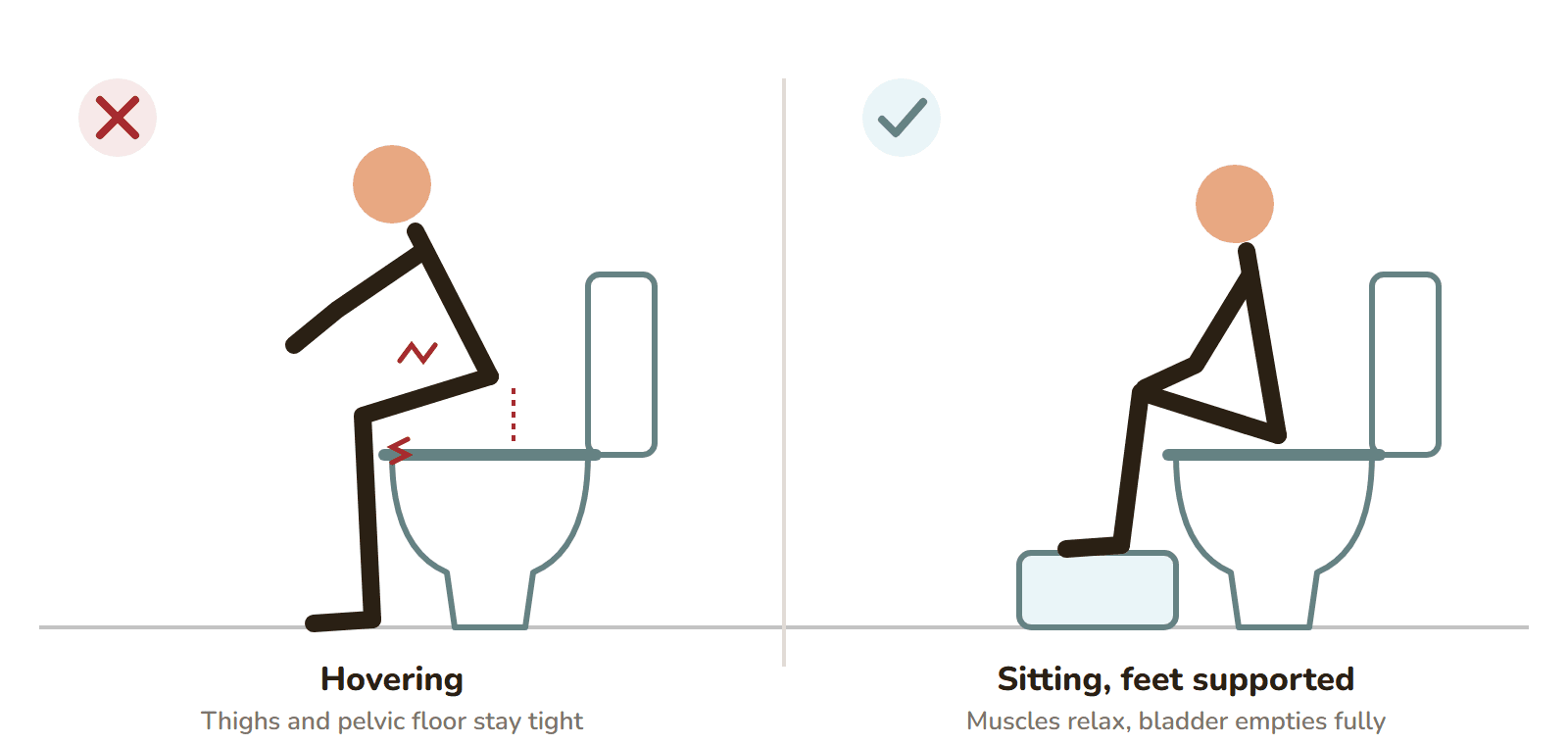
Many mothers teach their daughters to hover over a public Western toilet. Hovering keeps the thighs and pelvic floor (the muscles that hold the bladder and bowel shut) tight, so the bladder does not empty fully, and the leftover urine raises the risk of infection. Wipe or cover the seat and sit down fully, feet supported. An Indian squat toilet is fine, because squatting relaxes these muscles naturally.
Can a dirty toilet seat give my daughter a urine infection?
Almost never. When she sits, the opening of her urine passage does not touch the seat, and the skin of her thighs and bottom is a good barrier against germs. The urine infections we see in schoolgirls come from germs of her own bowel, not from the seat itself.
What lets those germs take hold is holding on. Stale urine left behind in a bladder that never empties fully, and the high, abnormal pressure built up inside it by squeezing to hold on, cause far more urine infections than a toilet seat ever could.
A dirty seat is still unpleasant to look at and to sit on, so wiping or covering it is worth it. The real reason is different, though: a seat she trusts is a seat she will sit on fully, instead of hovering or holding on until home.
Where toilet germs really matter is on the hands. After using any toilet, public or at home, she should wash her hands very well with soap and water for about 20 seconds, including between the fingers and under the nails. Where there is no soap, the hand sanitiser in her kit will do. Our short video shows the eight steps: Wash your hands the right way.
How can I help my daughter feel comfortable using the school toilet?
- Ask, do not scold: “What is the toilet like at school?” gets a better answer than “Why don’t you go?”
- Fixed toilet times: before leaving home, at every recess whether she feels the need or not, and on reaching home.
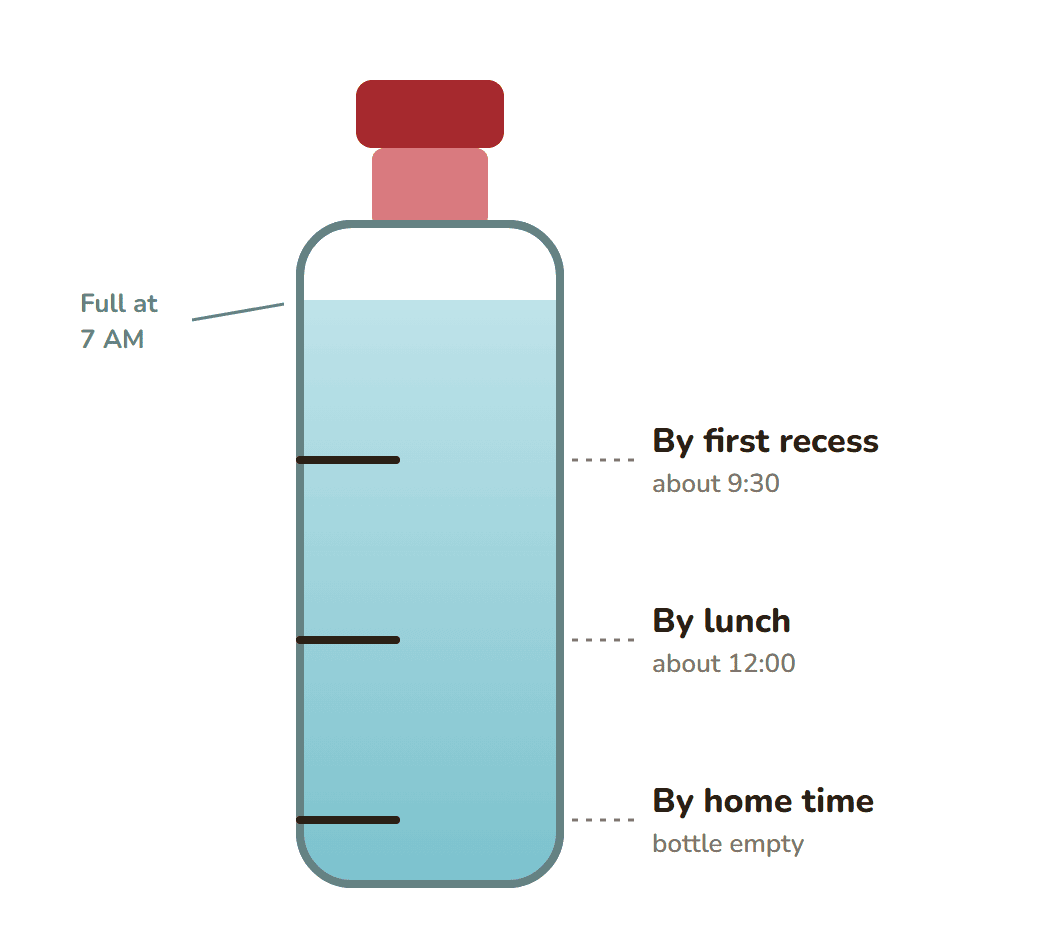
- A marked bottle: lines for first recess, lunch and home time, as in the picture below.
- Practise together: use both Indian and Western toilets with her at a mall or restaurant.
- A buddy: a friend guarding the door solves many privacy worries.
- Fibre and fruit: fruit, vegetables, dal and whole grains in breakfast and tiffin keep stools soft.
- Praise the effort: a sticker for each day the bottle comes home empty works well up to about age ten.
- Plan for travel: on long drives, picnics and at weddings, stop every two to three hours, and let her see you use a public toilet calmly.
If she is still young and not fully trained, our page on toilet training in children may help.
What should go in a school toilet kit for girls?
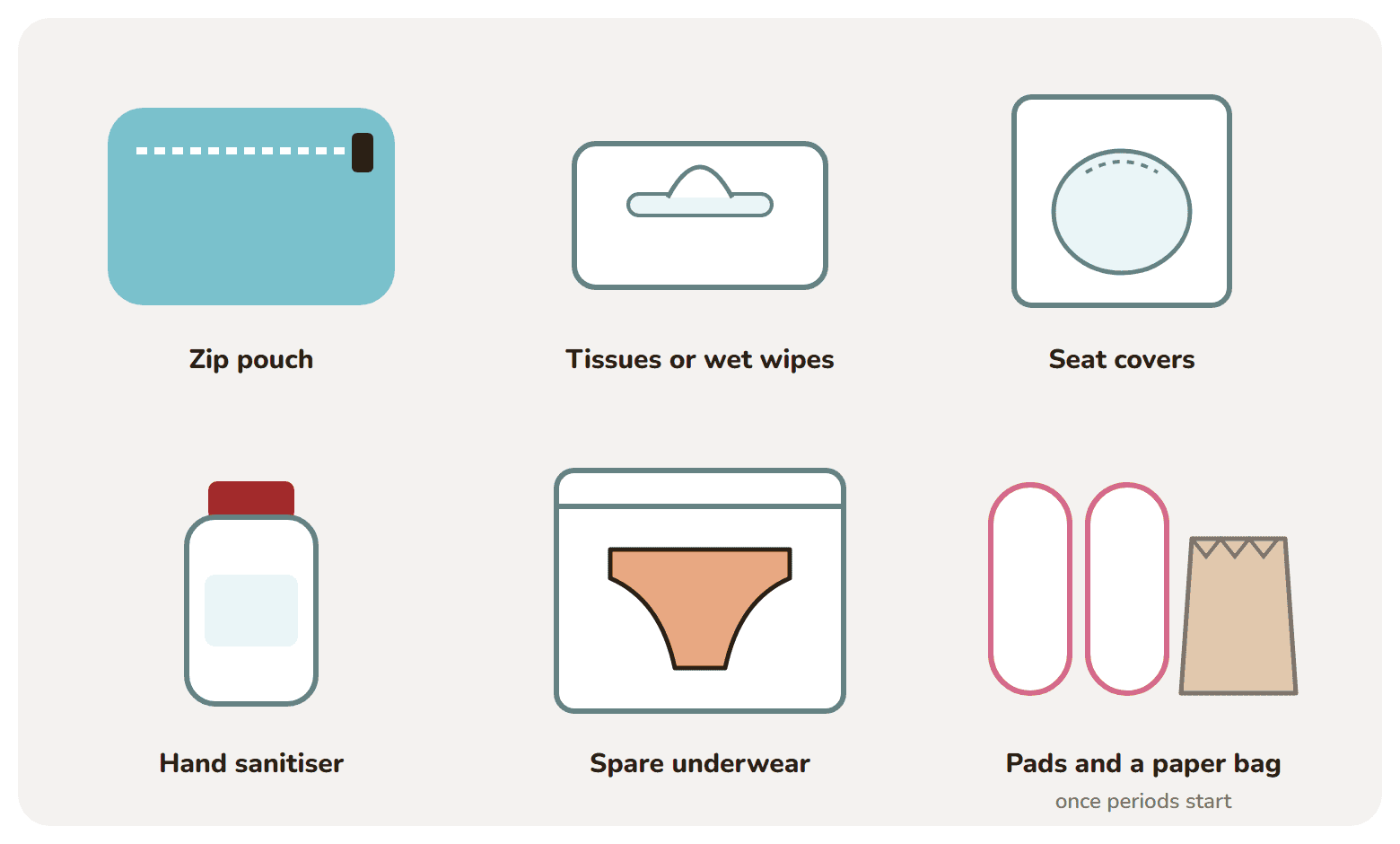
A small zip pouch in the school bag gives her control over a toilet that is not quite clean. Used wipes go in the bin, never in the toilet. Teach her to wipe from front to back every time, so germs from the bowel are not carried towards the urine passage, and to wash her hands properly afterwards.
How do periods change toilet use for older girls?
Once periods start, a girl needs water, a bin, a lock and time to change at least every four to six hours. Without these, many girls skip changing, which leads to rashes, itching and infection, or they stay home on heavy days. Talk to her about periods from about age nine, before the first one arrives at school. If the school has no bin or pads, raise it with the principal: it is a basic need, not a favour.
What can parents and schools do together?
- Speak to the class teacher: ask that she may go whenever she needs to, without explaining in front of the class.
- A doctor’s letter: if she has had urine infections or constipation, we can write a short note asking for free toilet access and water at her desk.
- Raise it at the PTA: twice-daily cleaning, soap, water, working locks and a covered bin are fair requests, and parents asking together get results faster. Better still, offer to visit and check that what was agreed is kept up.
- Check recess timing: a few extra minutes, or a toilet break between periods, helps younger children.
When should I see a doctor about school toilet avoidance?
Book a routine visit for burning or frequent urine, new daytime wetting after she was dry, stools less than three times a week, tummy pain that keeps coming back, or avoidance that lasts after a few weeks of these changes. Clinic timings are on our Contact page, and common questions on our FAQ page.
When to call us the same day
- Fever with burning urine, back pain, or pain in the side
- Vomiting with tummy pain, or a child who looks unwell
- Blood in the urine
- Severe tummy pain, or no stool for several days with a swollen tummy
Phone calls: 9867694813 · WhatsApp: +91 22 4006 0134
What happens when you see the doctor?
We start with a relaxed conversation with the girl herself, sometimes with her mother out of the room for a few minutes, and check her urine for infection. You may be asked to keep a voiding diary for two or three days, noting drinks, toilet trips, leaks and stools. Treatment is mostly a timed toilet routine, more water, softer stools and, where needed, a letter to the school. An ultrasound or a surgical opinion is needed only when infections keep returning or something does not add up.
Most girls are back to comfortable, regular toilet habits within a few weeks. You are not fussing by asking about it. You are protecting her bladder, her bowels and, most of all, her confidence.
The picture at the top of this article and the five-signs picture are AI-generated illustrations. The other drawings were made for this article.