Should Infants Use a Walker? A Pediatrician’s Warning & Safer Alternatives.
As parents, we are often eager to see our children hit those first milestones. The image of a baby scooting around the house in a colorful walker looks like progress. However, in our decades of practice at Nathani Clinic, I have seen that these devices often do more harm than good. Your child’s safety and physical development are too important to trade for a few minutes of convenience.
The Developmental Myth: Why Walkers Don’t Help
There is a persistent belief that a seated walker helps a child walk sooner. This is medically incorrect. In fact, seated walkers can lead to developmental delays. A child suspended in a seat does not learn to balance their own weight or strengthen their core.
More specifically, walkers encourage toe-walking. By allowing a child to propel themselves with their toes, the calf muscles tighten and the shin muscles remain weak. This creates an unnatural gait that we often have to correct later in the clinic.
How does a child learn to walk?
Like everything else, it is a staged process. The child first learns to sit with support initially and then without support. He then gets on all fours. The next step is to crawl around, pushing herself in different directions. Once proficient, the child learns to stand up and then, finally, takes steps gingerly. Along the way, there will be many failures, many a spill and a fall.
It is natural and vital for the child to spend time at each stage. The child initially needs help in each stage, and the parents are always eager to help.
The process of acquiring a new skill is both rewarding and frustrating to every human being, and especially so to the infant.
She must learn to balance and use the right muscles at the right time and at the right pace to progress from one activity to another. One mistake, and either she will fall or have a painful experience. To counterbalance that, her caregiver’s approval encourages her when she does something right. After repeated attempts, different muscle groups and reflexes develop and become strong at each stage.
The confidence and expertise developed at each stage set the foundation for successfully completing the next phase . It is just like constructing a building. If your foundations are weak or faulty, you invite a disaster.
The Surgeon’s View: Real Risks and Injuries
From a surgical perspective, the dangers are not theoretical. In a city like Mumbai, where many of us live in compact apartments or homes with varying floor levels, walkers become high-speed hazards.
-
Tipping Hazards: A child in a walker can reach speeds of one meter per second. They can easily tip over a door threshold or a rug.
-
Increased Reach: Walkers elevate children, allowing them to reach hot tea on a table, sharp objects, or household chemicals that were previously out of reach.
-
Stairway Falls: These are the most common causes of head injuries and fractures that land patients in my surgical ward. Even a single step can lead to a significant tumble.
Push Walkers vs. Seated Walkers
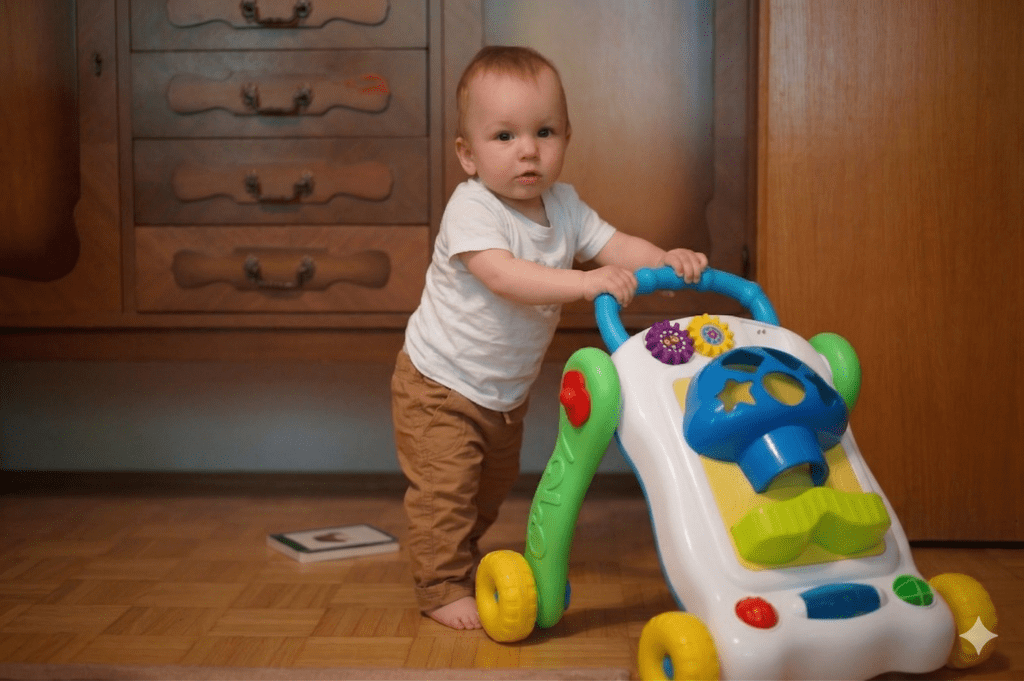
It is vital to understand the “Push vs. Seated” distinction. We strictly advise against seated walkers—the ones your child sits inside. We accept push walkers, which are sturdy toys that a child stands behind and pushes. These require the child to pull themselves up, maintain their own balance, and use their full feet to walk, which supports healthy muscle development.
Some product links on this page go to Amazon. If you buy through one, the clinic may earn a small commission at no extra cost to you. It never changes what we recommend.An example ofpush walkers we recommend. There are many others on Amazon. These are cheaper and better for your child than seated walkers like this one. There are many others available on Amazon or other online stores.
The Mumbai Context
During the Mumbai monsoon, we often keep our kids indoors for weeks. The temptation to use a walker to keep a fussy baby occupied is strong. Resist it. Our floors are often marble or tile, which are exceptionally slippery. A simple play mat or a safe “floor gym” is the best environment for your child to gain strength.
I already have a walker at home. What should I do?
Cut your losses. Dispose of the walker.